
3 mins read
Wars don’t just shake governments. They shake ad accounts.
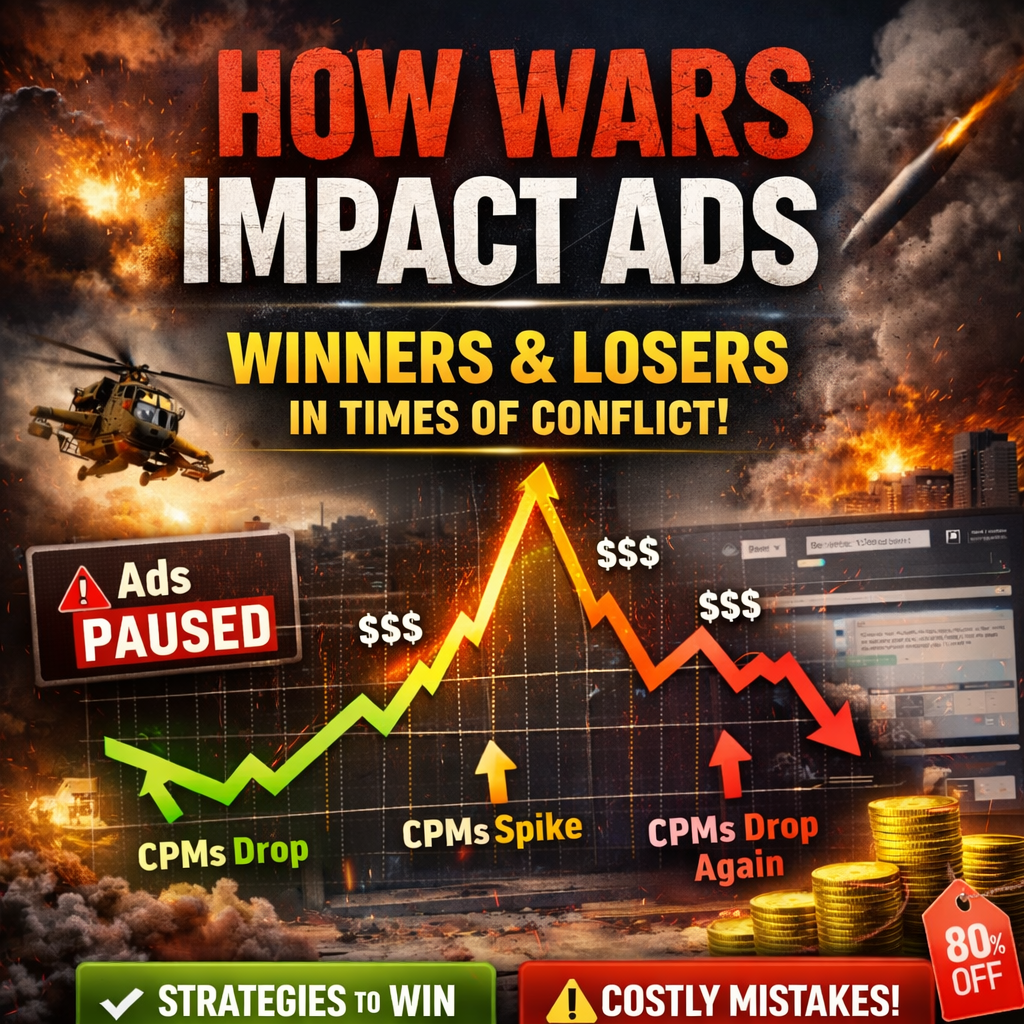
When a major conflict breaks out, the first thing that happens inside Meta and Google dashboards is chaos. CPMs drop. Then they spike. Then they fluctuate week to week.
In the first 48–72 hours, big brands pause campaigns. Legal teams step in. Brand safety alarms go off. As a result, ad inventory becomes cheaper. For smaller brands, this creates a short window of lower CPMs and cheaper clicks.
Then publishers monetize the traffic surge. News consumption shoots up. Platforms tighten brand safety filters. Money that was paused slowly returns — but now it chases fewer “safe” placements. CPMs rise again.
If the conflict continues, volatility becomes the norm.
What should you do? Don’t auto-pause everything. Monitor costs daily. That early dip can be some of the cheapest traffic of the quarter.
Platforms like Meta, Google and DV360 automatically restrict ads around sensitive keywords like “war” or “attack.” If you’re running Performance Max or Advantage+, your ads may silently stop serving in certain placements. Costs in “safe” inventory increase because everyone is competing for the same space. Review placement exclusions instead of blindly shutting campaigns off.
Now let’s talk behavior.
During conflict, attention shifts dramatically. People doom-scroll. News app usage can jump 40–60%. Entertainment drops initially. Email open rates fall. Short-form video engagement changes — branded Reels drop, news commentary spikes.
This means heavy “Buy Now” creative feels tone-deaf.
Instead of aggressive urgency like “Limited Time Offer,” switch to informational and value-driven messaging. For example, a financial advisory brand can publish content on “How to protect your savings during uncertain times.” A D2C brand can highlight reliability, customer support and stability.
Purchase intent also splits into two camps.
Some categories surge: insurance, gold, savings products, emergency supplies. Others dip: travel, luxury, international hospitality. If you’re in a surge category and you pause ads, you’re leaving revenue on the table.
Creative sensitivity matters more than placement. A party-themed campaign during a global crisis can damage trust instantly. Have a 24-hour review system when major news breaks.
Here’s the opportunity most brands miss: when big budgets pause, CAC drops. During COVID and election cycles, smaller brands that stayed consistent often gained cheaper customer acquisition and long-term brand recall.
People don’t stop buying during conflict.
They buy differently. They buy from brands that feel stable and human.
Performance marketing isn’t about reacting emotionally. It’s about understanding cycles — and having the discipline to act when others freeze.