
3 mins read
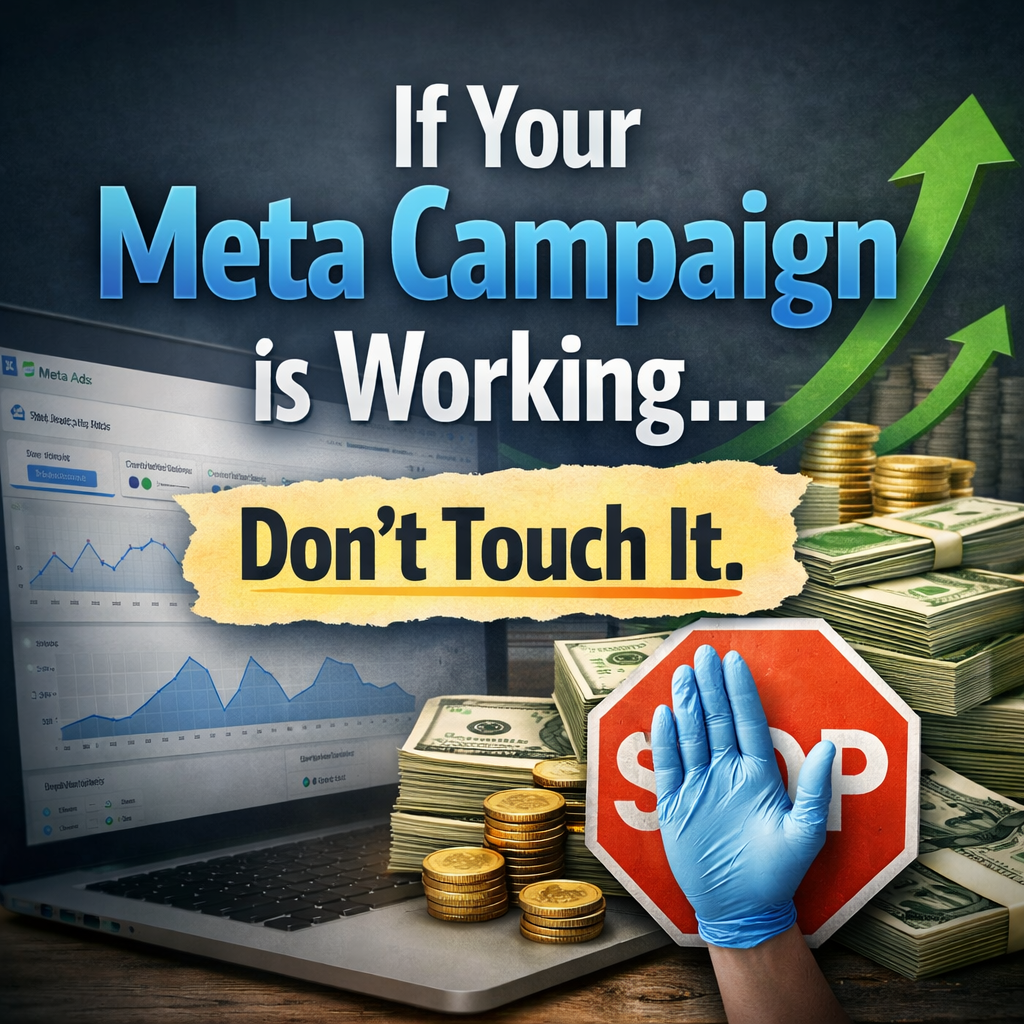
If the Meta campaign is delivering… don’t touch it.
There’s a special kind of chaos that only happens when a Meta campaign starts performing well.
Leads are flowing. ROAS is clean. CPMs are stable. CTR is holding. The client is happy. The dashboard is finally behaving like it owes you money.
And then someone says it.
“Should we optimize it?”
No.
If your Meta campaign is delivering, don’t touch it.
Not because you’re lazy. Not because you’re scared. But because you understand how Meta actually works. When an ad set is in rhythm, it’s usually sitting in a sweet spot: the algorithm knows who to show it to, the creative is matching intent, and the budget is being spent efficiently.
What most people call “optimization” is actually interruption.
It starts small.
•“Let’s tweak the headline once more.”
•“Maybe we should try a different hook.”
•“What if we change the audience to improve it further?”
•“Let’s reduce the budget slightly, just to test.”
And suddenly, you’ve kicked the campaign out of learning, reset delivery patterns, and confused the system just enough to tank performance… for the sake of feeling productive.
Here’s the uncomfortable truth:
A working campaign doesn’t need your creativity. It needs your discipline.
Marketing teams love movement because it feels like progress. But on Meta, the biggest wins often come from doing the most boring thing possible:
Letting it run.
That doesn’t mean “ignore it.” It means monitor it like a hawk, but act like a surgeon. Don’t open the body unless you’re sure something is broken.
What you can do while it’s working:
✅ Watch frequency creep
✅ Track lead quality, not just cost per lead
✅ Scan for fatigue signals
✅ Plan the next creative batch without interrupting the current winner
Because scaling isn’t about panic edits. Scaling is about protecting what’s paying your bills and building the next layer quietly in the background.
And here’s the second rule that too many brands forget:
Document what worked before someone touches it.
Screenshot the setup. Note the audiences. Save the creatives. Write down the offer, landing page version, and key metrics. Because sooner or later someone will “optimize” it into the ground — and when that happens, your documentation becomes the difference between recovery and starting from zero.
If it’s working, protect it.
Let it breathe.
Let the data do the talking.
Sometimes the best move in marketing…
is knowing when to step back.